What Is Soft Washing? The Method We Built Maverick On
Soft washing is low-pressure cleaning paired with a targeted solution that kills algae, mold, and mildew at the root instead of just blasting it off the surface. It's the only method we use on siding, roofing, and other delicate exterior surfaces, and it's the reason this company exists in the first place.
If you've never heard the term before today, you're not alone. Most homeowners assume "clean the house" means a pressure washer, full stop. That assumption is exactly what damages more St. Louis homes than the dirt ever did.
This page exists to actually explain the method, not just claim it's better. If you're comparing companies or trying to figure out why your neighbor's roof looks fine while yours has dark streaking creeping back every year, the answer usually comes down to which method was used and whether it addressed the actual cause.
We get asked some version of this question on nearly every call: why does this cost more than a guy with a pressure washer and a garden hose attachment? The honest answer is that soft washing takes more knowledge, more product cost, and more care to do right. It's a different service, not a marked-up version of the same one.
- Ask the Seal™ Certified
- Licensed & insured
- Free written quotes
What Is Soft Washing?
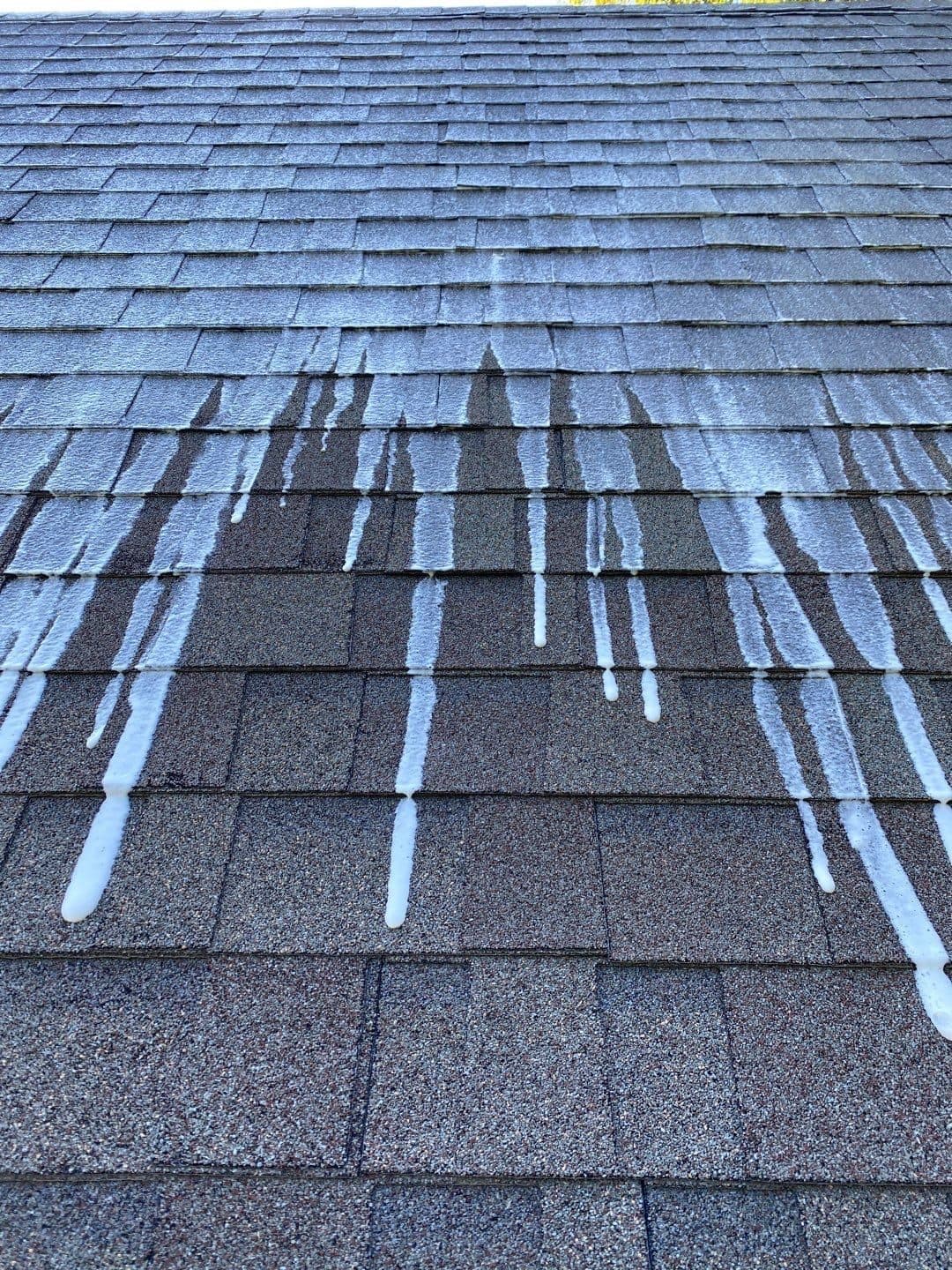
Soft washing runs at roughly 500 PSI or less, a fraction of the 2,000 to 3,000-plus PSI a pressure washer puts out. That low pressure alone isn't enough to lift years of algae and mildew buildup on its own, which is why soft washing pairs it with a cleaning solution built to do the actual work.
The solution goes on, breaks down the organic growth living on the surface, and then gets rinsed away gently. No blasting, no force, no risk to paint, caulk, or trim. The pressure isn't doing the cleaning here. The chemistry is.
That's the core difference most homeowners don't know until someone explains it: pressure washing relies on force, soft washing relies on a targeted reaction. One knocks dirt loose. The other kills what's actually causing it.
Think about it the way you'd think about a weed in your yard. You can mow it down, and it looks gone for a week. Or you can kill it at the root, and it stays gone. Pressure washing is the mower. Soft washing is the root treatment.
The term itself comes from the equipment as much as the chemistry. Soft wash rigs use low-pressure pumps and specialized nozzles designed to move a solution across a vertical surface evenly, not to blast anything off it. The equipment and the chemistry work together, and neither one does the job alone.
The Chemistry Behind Soft Washing
The cleaning solutions used in soft washing are EPA-compliant, biodegradable, and built from professional-grade detergents and surfactants that break down organic growth at the root rather than just knocking it off the surface. This isn't a secret formula. It's standard, well-established exterior cleaning chemistry used across the industry, applied with real judgment about concentration, dwell time, and surface type.
That black or greenish streaking you see on roofs and siding across St. Louis has a name: gloeocapsa magma, a bacteria commonly called black algae that feeds on the limestone filler in asphalt shingles and spreads fast in our humid climate. Pressure alone doesn't kill it. It just knocks the visible colony loose, which is why pressure-washed surfaces often look streaked again within months. Soft wash chemistry actually kills the organism, not just what's growing on top of it.
Application matters as much as the solution itself. Too weak a mix and it won't fully break down the growth. Too strong or too long a dwell time on the wrong material and it can affect surrounding plants or surfaces if it's not handled with real care. This is exactly why soft washing is a skill, not just a supply list.
Surfactants play a specific role here. Water alone beads and runs off vertical siding fast, which means a cleaning solution without a surfactant wouldn't have time to actually break down organic growth before it slides off. Surfactants reduce that surface tension, letting the solution cling long enough to do its job before we rinse it away.
Dwell time is the part that separates a rushed job from a real one. Different surfaces and different levels of buildup need different amounts of contact time before rinsing. A light coating of mildew on vinyl siding might need less time than heavy black algae staining on an aging asphalt roof. Rushing that step is how a soft wash job ends up looking incomplete.
What Surfaces Soft Washing Is Used On
Soft washing is built for the surfaces a pressure washer would damage.
Siding. Vinyl, wood, and Hardie board siding all hold onto algae and mildew, especially on shaded or north-facing walls. Soft washing clears it without stripping paint or driving water behind the panels. Our house washing service in Kirkwood shows this exact process on real St. Louis homes.
Roofing and shingles. Asphalt shingles are especially vulnerable to gloeocapsa magma staining, and they're also exactly the material a pressure washer can crack or dislodge. Soft washing removes the algae without touching the shingle's integrity, and it does so without you ever needing anyone to physically walk the roof surface aggressively to scrub it.
Stucco and brick. Both materials are porous enough that high pressure can force water into places it shouldn't go, behind stucco panels or into brick and mortar joints. Soft washing cleans the surface without opening that door, which matters even more on older St. Louis homes where original mortar wasn't built for modern pressure equipment.
Decks and fences. Wood surfaces are particularly at risk from pressure washing, since concentrated force shreds and lifts wood fibers, opening the grain to water intrusion. Soft washing avoids that damage entirely, and it's the reason wood care requires its own careful approach rather than a generic blast-and-go. It's also the right prep step before staining or sealing, since a properly soft-washed surface absorbs finish evenly instead of trapping buildup underneath it.
Gutters. The exterior face of a gutter system builds up the same oxidation staining you'll see on siding, and soft washing clears it the same way, gently and without damaging the metal or the fascia behind it.
Across every one of these surfaces, the principle stays the same. Kill the growth, protect the material underneath. That principle doesn't change based on what's dirty. It changes how we approach each surface, not whether the surface gets treated with the same respect.
Why Soft Washing Results Last 3-5x Longer
Because pressure washing only removes what's visible on the surface, algae and mildew that survive below the surface start regrowing almost immediately. It looks clean for a few weeks, then the streaking creeps back.
Soft washing kills the organism at the root. There's nothing left to regrow at the same pace, which is why results from a soft wash last three to five times longer than a pressure rinse. You're not just buying a cleaner-looking house for a season. You're buying a longer stretch before the problem returns at all.
That gap adds up fast if you're comparing costs over a few years rather than just the first visit. A homeowner who pressure washes every year is paying for the same job repeatedly, on top of whatever damage accumulates along the way. A homeowner who soft washes on a longer cycle is paying less often for a result that actually holds.
Is Soft Washing Safe for My Home, Plants, and Pets?
Yes, when it's done with real care around what's growing nearby. Every product we use is biodegradable, and we take real protective steps before we ever start spraying: pre-wetting landscaping, covering flower beds, and rinsing thoroughly around anything living near the work area.
We back that up with a 100% Plant Protection Guarantee. If something around your property gets affected, we make it right. That's not a vague promise. It's a real commitment tied to how we actually run every job.
Soft washing is also safe for your home's materials in a way pressure washing isn't. No stripped paint, no water forced behind siding, no cracked shingles. The surfaces most vulnerable to damage are exactly the ones this method was built to protect.
If you've got kids or pets who use the yard right after we finish, that matters too. We time application and rinsing so the treated areas aren't a concern once we've wrapped up and walked the property with you. Nothing about the process should require you to keep everyone off the lawn for days afterward.
Soft Washing vs. Power Washing: The Short Version
Power washing has its place. It's the right tool for concrete, driveways, and other hard flatwork that can take real pressure. Soft washing is the right tool everywhere else, siding, roofs, stucco, and wood — for the full side-by-side comparison, including which surfaces need which method, see our power washing page.
Ask the Seal™ Certified Soft Washing in St. Louis
This is the method we built this company around. Not one service among several. The reason Maverick Softwash exists at all.
We're Ask the Seal™ certified, fully licensed, background-checked, and carry $2M in liability coverage. Decades of hands-on experience across St. Louis properties sit behind every one of those credentials, and they're not just badges we display. They're the standard we hold ourselves to on every roof, every wall of siding, every job.
When a company is named after the method it uses, that method had better hold up. Soft washing is the reason this business exists, and it's the only way we clean the surfaces that can't take a pressure washer.
That's a different starting point than a general pressure washing company that added "soft wash" as one more line item on a service menu. For us, it's not an add-on. It's the whole premise the business was built around, and every certification, every insurance policy, and every year of experience behind this company exists to back that up on your property specifically, not as a generic claim on a page.
We've applied this method to houses across every corner of the St. Louis area, on siding that's decades old and siding that's brand new, on roofs that hadn't been touched in years and ones that just needed routine upkeep. The material changes. The method doesn't.
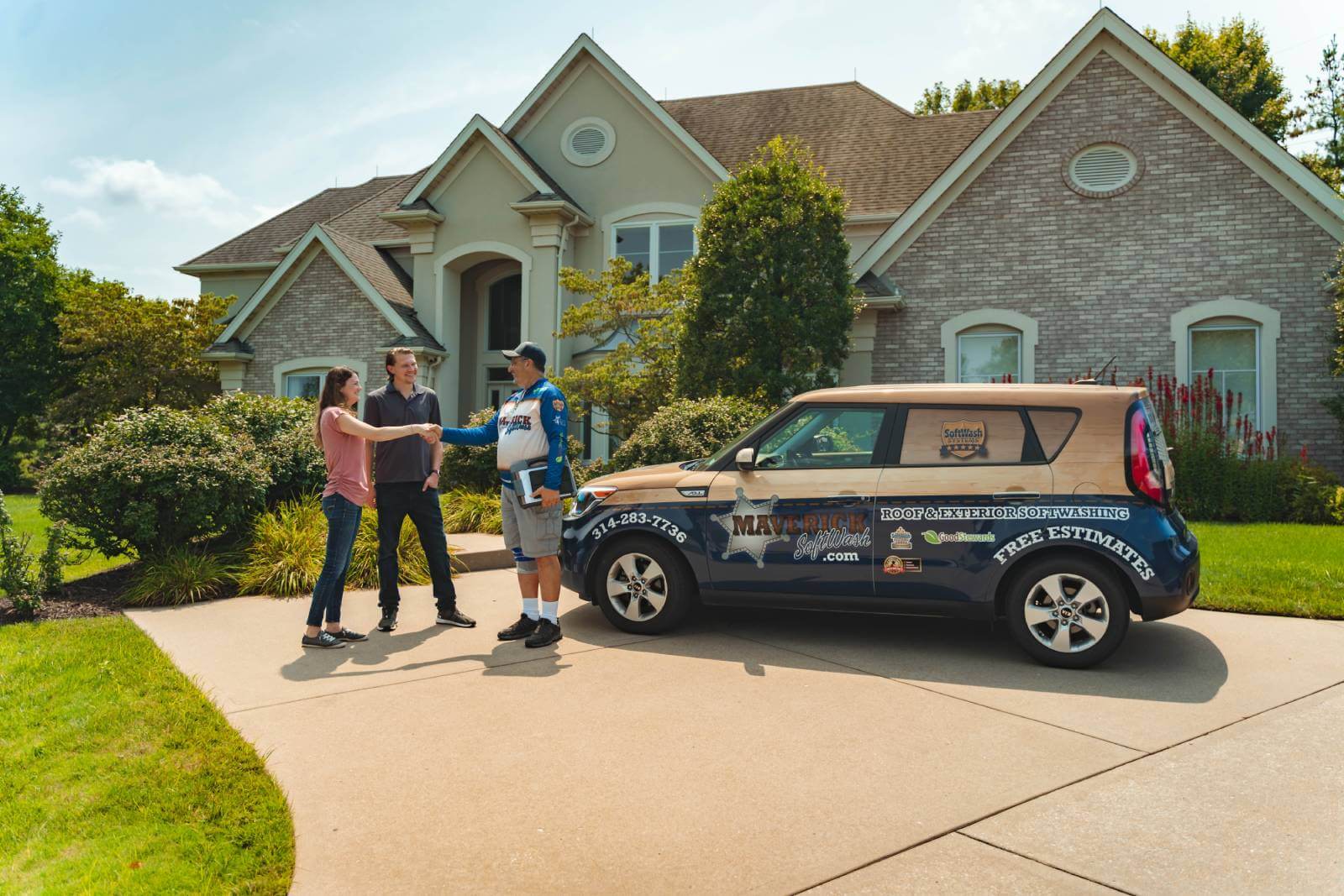
Ready to see what soft washing does for your home? Get in touch and we'll get you a free, written estimate.