
Black Streaks on Your Roof? What They Are and How to Remove Them
TLDR: Those black streaks are a living organism called gloeocapsa magma, not dirt or age. It feeds on your shingles, spreads with St. Louis humidity, and pressure washing makes it worse, not better. Soft washing kills it at the root and the results last three to five times longer. DIY is possible but genuinely risky on a steep roof. Read on for the full breakdown, or skip to our roof cleaning page if you already know what you need.
You look up at your roof one afternoon and there it is. Dark streaks running down from the ridge like something spilled and never got cleaned up. You didn't spill anything. Your roof did this to itself, sort of, with a little help from a microorganism you've probably never heard of.
The good news is this is one of the more solvable problems a homeowner runs into. The bad news is that most of the popular fixes, rent a pressure washer, scrub it yourself, ignore it and hope, either don't work or actively make things worse. Let's get into what's actually going on up there.
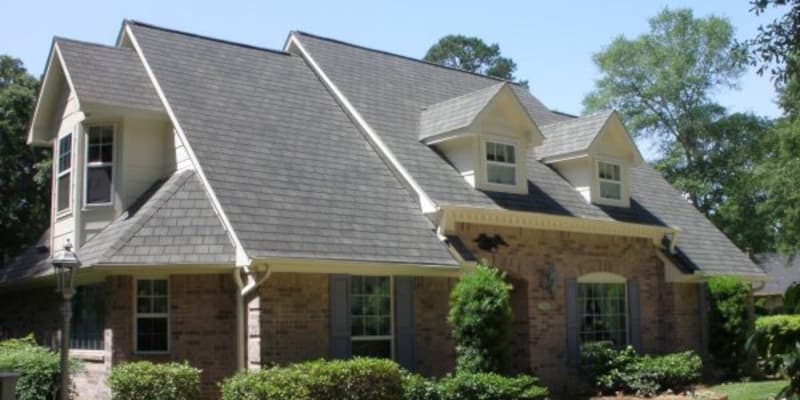
What Those Black Streaks Actually Are
The streaking has a name: gloeocapsa magma. It's a bacteria, commonly called black algae, and it's genuinely alive up there, feeding on the limestone filler that's baked into most asphalt shingles.
It doesn't show up randomly. It travels by spore, gets carried by wind and rain, and lands on your roof looking for exactly the conditions Missouri hands it every summer, warmth and humidity. Shaded and north-facing sections of the roof, the parts that don't dry out fast after a storm, are where it usually takes hold first.
Once it's established, it spreads. Slowly at first, then a lot faster once the colony's big enough to keep feeding itself. That's why the streak you barely noticed last spring somehow covers half your roofline by fall.
Missouri is basically a welcome mat for this stuff. Humid summers, plenty of rain, and no shortage of shaded rooflines under mature trees. St. Louis-area homes deal with gloeocapsa magma more than homes in drier climates simply because the conditions here favor it. It's not a sign you did anything wrong. It's just what happens to an asphalt shingle roof in this part of the country if nobody's addressed it in a while.
Why They Spread and What They Cost You
Here's the part that turns this from a cosmetic problem into an actual expense. Gloeocapsa magma feeds on the limestone in your shingles, which means it's slowly breaking down the material it's living on. Left alone long enough, that process contributes to granule loss, the same granules that protect your shingles from UV damage and help them shed water properly.
Dark staining also absorbs more heat than clean shingles do. A roof running hotter than it should, especially through a St. Louis summer, isn't doing your attic, your energy bill, or your shingles any favors over time.
None of this means your roof is about to fail because of a streak or two. It means the problem gets more expensive to reverse the longer you leave it, and what starts as an appearance issue slowly becomes a maintenance one.
There's a resale angle worth mentioning too. A streaked roof reads as a neglected roof to a buyer walking up your driveway, even if the roof itself has plenty of life left. First impressions matter more than they should, and a clean roofline does a lot of quiet work toward a home looking cared for.
Can You Remove Them Yourself?
Technically, yes. Realistically, think hard about it first.
There are DIY treatments out there, store-bought cleaning solutions, garden sprayers, a lot of forum advice about the "right" mix and how long to let it sit. Some of it can knock back light staining if you're careful. The trouble isn't the concept, it's the execution.
You're doing this on a sloped, often slippery roof, handling a chemical solution that needs the right concentration and dwell time to actually work without damaging your shingles or your landscaping below, and you're doing all of it without the harness, footwear, and experience a crew that does this every week has. That's a real fall risk, not a hypothetical one, and it's the single biggest reason most homeowners call a professional instead of climbing up there themselves.
If your roof is low-pitched, easily accessible, and the staining is minor, a careful DIY attempt isn't insane. If it's steep, two stories up, or the streaking is heavy, the math on doing it yourself stops making sense pretty fast. The savings aren't worth what's actually at risk.
There's also a middle ground people skip past: getting quotes before assuming a pro job is out of your budget. A lot of homeowners spend a Saturday on a DIY attempt that only partially works, then end up calling someone anyway to finish the job right. Getting a number upfront at least lets you make that call with real information instead of a guess.
What Actually Removes Them for Good
Think of it like a weed in your yard. Mow it down and it's back in a week, still rooted, still growing. Pull it out by the root and it's actually gone. Pressure washing is the lawnmower here, brute force that flattens what's visible and leaves the organism very much alive underneath your shingles.
The fix that works is a low-pressure clean paired with a targeted solution that goes after the organism itself, not just what you can see. Once the algae's actually dead instead of just knocked flat, it's not staging a comeback next spring. That's the whole difference between a roof that looks good for a month and one that stays clean for years.
We cover the full method, the chemistry, and why it's the only safe approach for a shingle roof on our soft washing page. If you're in Kirkwood specifically, our roof cleaning page breaks down what a visit actually looks like, backed by a 5-Year Spot-Free Warranty on the work.
FAQ
Do black streaks mean my roof is failing? No, not on their own. Streaking is a cleaning problem, not a structural one. Left untreated long enough it contributes to granule wear, but a stained roof and a failing roof are two different situations. Don't let a streak talk you into a replacement you don't need yet.
Will my homeowners insurance care about the staining? Algae staining alone typically isn't a covered claim, it's considered routine maintenance, not storm or structural damage. Some insurers do flag visibly neglected roofs during inspections or renewals, so keeping up with cleaning is generally a smart move regardless of whether a claim is ever involved.
How long does removal actually last? With soft washing, results typically last three to five times longer than pressure washing, since the organism is killed at the root instead of just knocked off the surface. Exactly how long depends on your roof's shade exposure and the local humidity, but you're not looking at streaking creeping back within a single season the way you would after a pressure rinse.
Ready to get those streaks handled the right way? Get in touch and we'll get you a free, written estimate.