Roof Cleaning in Kirkwood, MO
Those black streaks running down your shingles aren't dirt, and they're not going away on their own. If your Kirkwood roof has dark staining that seems to spread every year, here's what's actually happening and why the wrong fix can cost you more than the streaking ever did.
We clean roofs across Kirkwood every season, and the questions we get are almost always the same: what is this, why is it spreading, and is it safe to clean without wrecking the shingles. Here's the honest answer to all three.
- Ask the Seal™ Certified
- Licensed & insured
- Free written quotes
Black Streaks on Your Kirkwood Roof? Here's What's Causing Them
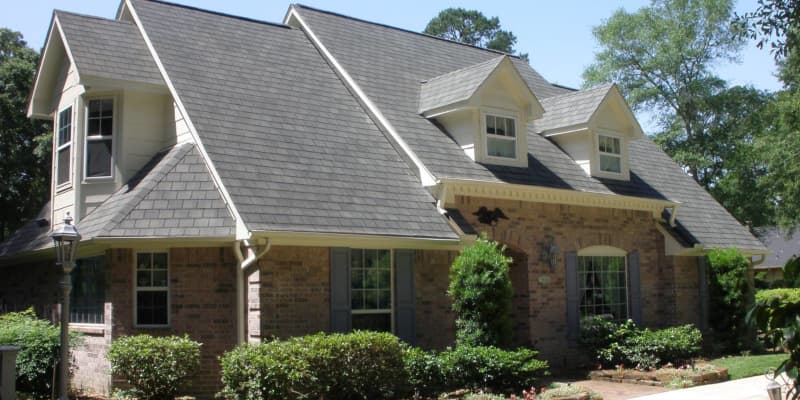
That staining follows a pattern. It usually starts on the shaded or north-facing side of the roof, then spreads across the rest of the shingles over a season or two. It's not soot, it's not shadows, and pressure alone won't get rid of it for good.
A lot of Kirkwood homeowners assume the streaking means the roof is wearing out or needs replacing. Most of the time it doesn't. It's a cleaning problem wearing a shingle-replacement costume, and treating it as one saves you a lot of money you didn't need to spend.
What Is Gloeocapsa Magma?
That black streaking has a name: gloeocapsa magma, a bacteria commonly called black algae. It feeds on the limestone filler in asphalt shingles, and it spreads fast once it takes hold, especially anywhere the roof stays damp longer than the rest of the house.
Because it's a living organism, not just surface grime, blasting it off doesn't solve the problem. Some of it survives beneath the surface and regrows, which is why a pressure-washed roof often looks streaked again within a year.
Left untreated long enough, gloeocapsa magma doesn't just make your roof look older than it is. The colony spreads outward from wherever it first took hold, and a small patch of staining today is a roof-wide problem in a couple of seasons if nothing addresses the actual organism.
Why Kirkwood's Tree Canopy Makes This Worse
Kirkwood is known for its mature, heavily-treed streets, and that same shade that makes the neighborhood beautiful also gives algae exactly what it wants. Shaded rooflines stay damp longer after rain and get less direct sun to dry them out.
Less UV exposure means less natural die-off for the algae colony. Combine that with consistent shade from mature trees, and you've got a roof that holds onto moisture and organic growth longer than a home in full sun would.
That's part of why treating this once and assuming it's done doesn't hold up under Kirkwood's tree cover the way it might in a more open subdivision. A shaded roof needs a method that actually kills the growth, not just knocks it back for a season.
Why Soft Washing Is the Only Safe Way to Clean a Shingle Roof
Here's what most roof cleaning companies won't tell you. High-pressure washing can strip the protective granules right off your shingles, and shingle manufacturers generally advise against high-pressure cleaning methods for exactly that reason. Depending on your shingle manufacturer, improper high-pressure cleaning may even affect your roof's warranty coverage.
That's not a small risk to take with one of the most expensive surfaces on your home. Soft washing runs at low pressure, paired with an EPA-compliant, biodegradable cleaning solution that kills the algae at the root instead of blasting the shingle surface. No granule loss, no warranty risk, and no reason to gamble with a roof you can't afford to replace early.
We never run high pressure on a shingle roof, full stop. There's no version of the job where that trade-off makes sense, and we're not willing to save time on a visit by putting your roof's remaining lifespan at risk.
For the full breakdown of how the soft-wash method works and why it's the safer choice across every part of your home, see our soft washing page.
Backed by Our 5-Year Spot-Free Warranty
We stand behind roof cleaning with a 5-Year Spot-Free Warranty. Most guarantees you'll find in this business are a vague "satisfaction promise" or a single season. We're putting five years on paper.
That's not a marketing line. It's a direct reflection of how we clean. Because soft washing kills gloeocapsa magma at the root instead of just knocking it off the surface, the algae doesn't come roaring back in a season the way it does after a pressure rinse. A warranty that long only makes sense if the method actually holds up, and ours does.
Think about what it would mean for a company to promise five spot-free years using a method that only removes what's visible on the surface. It wouldn't hold. A short guarantee is often a quiet admission that the underlying method doesn't actually solve the problem long term. Ours does, so we're comfortable putting a real number on it.
Why Kirkwood Homeowners Trust Maverick Softwash
A five-year warranty isn't something a company hands out carelessly. It's a bet we're making on our own process, and we only make that bet because we've seen it hold up job after job.
We're Ask the Seal™ Certified and fully insured, with decades of hands-on experience cleaning roofs across the St. Louis area. Every claim on this page, the algae science, the manufacturer risk, the warranty length, is something we can back up on your actual roof, not just state on a page.
That matters most when it's your roof on the line. A five-year warranty means we're the ones with something to lose if we cut a corner. That's the kind of accountability worth checking for before anyone climbs onto your house.
Already working with us on the rest of your exterior? Check out our house washing service in Kirkwood for the same crew and the same standard applied to your siding.
Ready to get those streaks gone for good? Get in touch and we'll get you a free, written estimate.