
How Often Should You Wash Your House in Missouri?
TLDR: For most Missouri homes, every one to two years is the honest answer. Not a law carved in stone -- a guideline. If your place is shaded, sitting under a lot of trees, or facing north, you'll probably land closer to the one-year mark. Full sun, open lot, newer siding -- you might stretch closer to two. Nobody can hand you an exact number without seeing your house, but if it's been over two years and you haven't looked closely at your siding, go look. You'll probably see why you're reading this.
We get asked this constantly. Homeowners want a rule -- "wash it every X months" -- something they can set and forget. We wish we had that for you. We don't, because your neighbor's house and your house aren't dealing with the same conditions even if they're two doors down. What we can give you is a real framework instead of a made-up number, so let's get into it.
Why Missouri Makes Houses Dirty Faster Than Most Places
Start with winter, because it does more damage than people realize. Missouri swings through freeze-thaw cycles all season -- water works into hairline gaps and seams, freezes solid, expands, and loosens things a fraction more each time. No single freeze wrecks anything. It's the repetition across a whole winter that leaves siding more porous and more welcoming to whatever tries to grow on it next.
Then summer shows up and cranks the humidity. Hot, muggy air sitting on a house for months gives algae and mildew exactly the damp, warm environment they need to spread. That's the second punch, right after winter softened things up.
Spring pollen is the third. It doesn't just look bad coating your gutters and window sills yellow-green -- it holds moisture against the surface underneath it, which is precisely the condition algae wants. A siding surface that's already staying damp longer than it should gets even damper once pollen sits on top of it.
Stack winter's freeze-thaw wear, summer's humidity, and spring's pollen buildup, and you've got a climate that's coming at your exterior from three different directions in a single year. That's not us trying to scare you into a booking. It's just the reality of owning a house in this state. It's also why "how often" doesn't have one universal answer -- your house is working through a specific version of that fight depending on where it sits.
Signs It's Time
Forget the calendar for a second. Your house will tell you when it's ready. Here's what to look for.
Green film on the siding, especially low or in shaded corners. That's algae getting comfortable. It doesn't show up overnight -- by the time you notice it, it's been building for a while.
Black streaks running down from the roofline or gutters. That's a different organism than the green stuff, and it's stubborn. It shows up most on the north side of a house, where the sun doesn't hit long enough to dry things out.
Spider webs and wasp nests tucked up under the soffits. People don't think of this as a "dirty house" sign, but it is one. Bugs go where there's undisturbed buildup and shelter. A house that gets cleaned regularly doesn't give them as much to work with.
A dingy, almost gray cast on the north-facing side of your home, even if the rest of the house looks fine. Shade and moisture do that. It's usually the first side to go and the last one homeowners notice, because you're not looking at it every day.
If you're seeing two or more of these, you're not early. You're about on time. If you're seeing all four, you probably could've called a few months ago.
What Actually Affects Your Schedule
This is where the "one rule for everyone" idea falls apart. A few things move your actual timeline more than anything else.
Shade and tree cover. A heavily treed lot holds moisture longer after every rain. More moisture sitting on the siding means faster algae growth, plain and simple. If your yard looks like a small forest, budget for cleaning more often than the neighbor with an open lot.
Which direction your house faces. North-facing walls get less direct sun. Less sun means slower drying, and slower drying means algae and mildew get a longer runway. It's the same reason moss grows on the north side of trees.
Siding material. Some materials hold onto grime and organic growth longer than others just based on texture and porosity. It's worth knowing what you've got when you're thinking about timing.
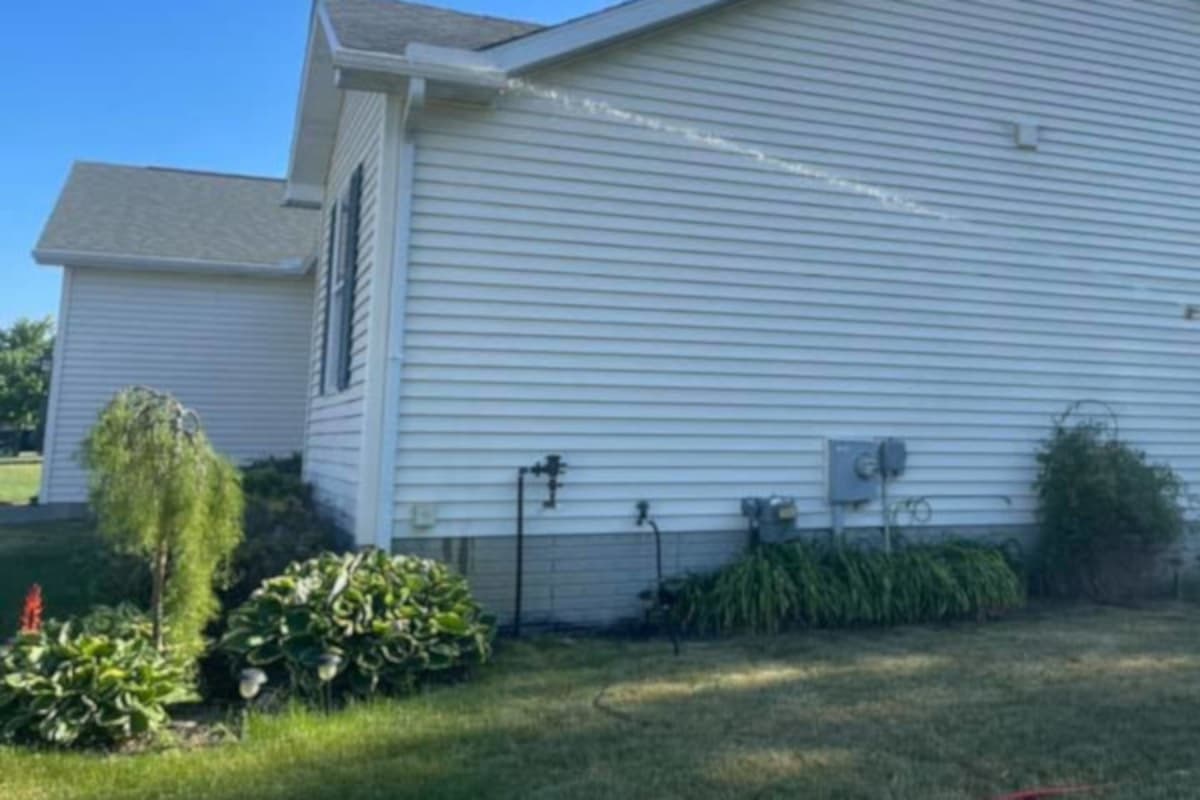
Sprinklers hitting your siding. If your irrigation system sprays the base of your house every time it runs, you're basically hand-feeding algae a water supply. We've seen homes with sprinkler overspray need attention noticeably sooner than a nearly identical house next door without that problem. Redirect the heads if you can -- it buys you real time.
Stack a couple of these against you -- heavy shade, a north wall, sprinklers hitting the siding -- and you're not looking at "every couple years." You're looking at closer to annual, maybe even sooner in certain spots.
Can You Wait Too Long?
Yes. We're not going to blow smoke here. Algae and mildew are living organisms feeding on organic material on your siding. The longer they sit, the more established they get, and the harder -- and sometimes pricier -- the eventual clean gets. Left unchecked for years, that buildup can also work against your paint and siding material over time.
Here's the other honest half of that answer: being a year late isn't a catastrophe. If you meant to get it done last spring and life happened, your house isn't ruined. You're not staring down a five-figure repair because you missed a window. You just get to deal with a dirtier job than if you'd stayed ahead of it. Don't panic. Just don't let "a year late" turn into "five years late," because that's a different conversation.
If you're not sure where your house stands, soft washing resets the clock without doing the surface any harm -- more on that below.
FAQ
Does washing damage my siding?
Not the way we do it. We soft wash, which means low pressure and a solution designed to kill growth at the root instead of blasting the surface with force. High-pressure equipment can drive water behind siding, strip paint, and stress aging trim -- we don't run our equipment that way. Soft washing gets the same result, or a better one, without the risk.
What's the best season in Missouri to get it done?
Spring is popular because that's when everyone notices the winter grime and the pollen film all at once, and it sets the house up clean going into summer. Fall works well too if you want it looking sharp heading into the holidays and want to knock down buildup before winter sits on it for months. There's no wrong season, honestly. The wrong move is waiting until it bothers you enough to finally call.
Does a maintenance schedule make sense for my house?
For a lot of homes, yes. If you're dealing with heavy shade, a north-facing exposure, or you're just tired of playing catch-up every couple years, ask about a maintenance schedule. It takes the guesswork out of "is it time yet" entirely.
Not sure where your house falls on any of this? That's a five-minute conversation, not a guessing game. Reach out or check what house washing near you actually looks like in practice, and we'll tell you straight what your place needs.