
House Washing in St. Louis, MO
Your siding doesn't get dirty. It gets colonized. That black streaking, that green film creeping up the north side of your house -- that's algae, mold, and mildew setting up shop and feeding on your exterior. House washing is how you kill it, not just knock it loose for a month.
- Ask the Seal™ Certified
- Licensed & insured
- Free written quotes
What Is House Washing?
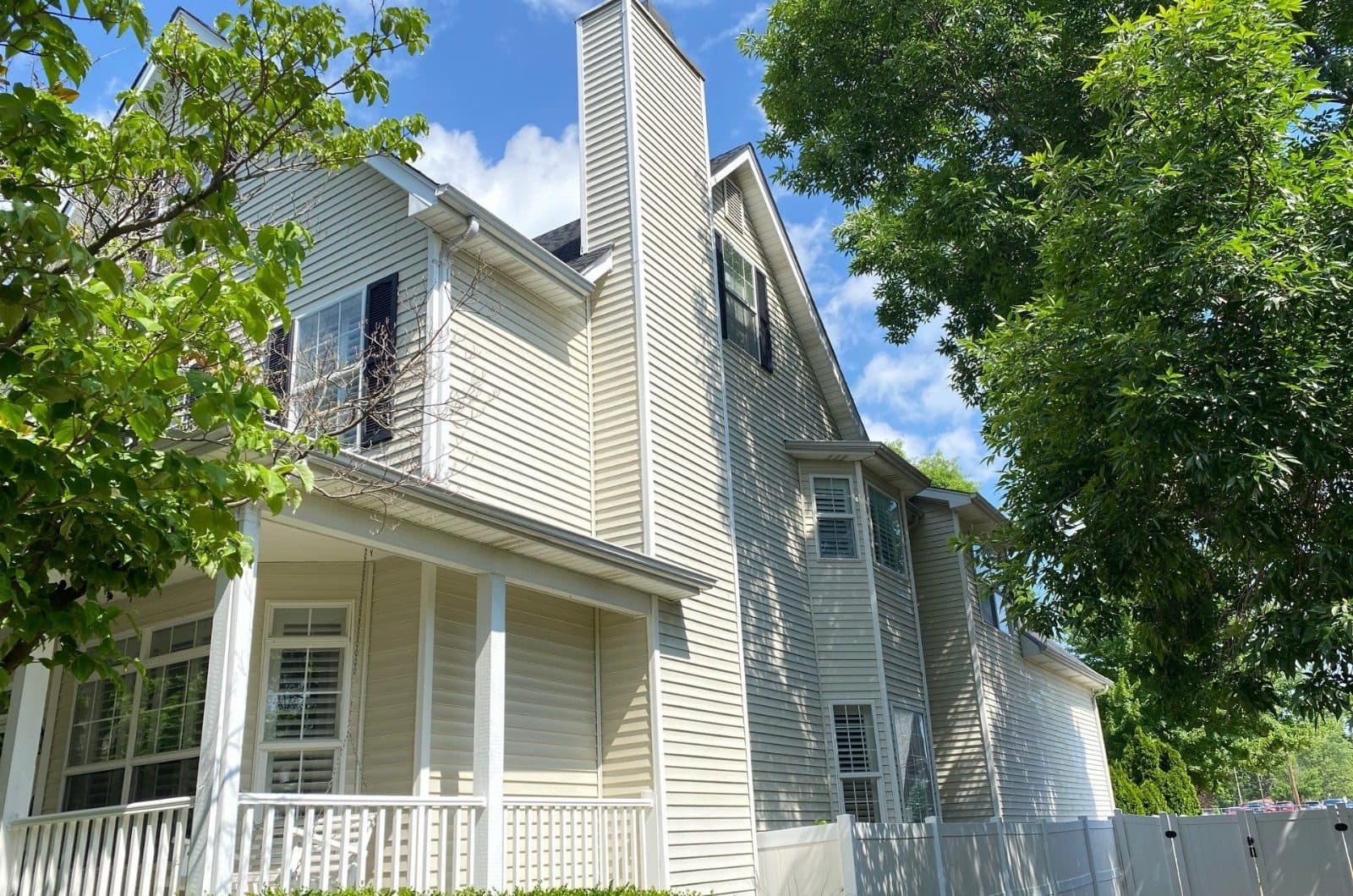
House washing is the professional cleaning of your home's exterior surfaces -- vinyl siding, brick, stucco, wood trim, fascia, soffits -- to remove algae, mold, mildew, dirt, and pollutants that build up over time.
Done right, it's not a rinse. It's a treatment. The goal is killing the organic growth causing the problem, not just spraying away what's sitting on the surface today. That distinction is the whole ballgame, and it's why the method matters as much as the result.
St. Louis makes this a bigger deal than it is in drier climates. Our summers run hot and humid, our winters swing between freeze and thaw, and a lot of our housing stock has mature tree cover. That combination is exactly what algae and mildew need to thrive. If your home hasn't been washed in a couple of years, there's a good chance something is already growing on it, whether you can see it clearly yet or not.
Why Soft Washing Is the Right Method
Here's where a lot of homeowners get steered wrong. Someone shows up, calls it "house washing," and runs a gas-powered pressure washer straight at your siding. That's not house washing. That's a good way to damage your home.
We do not pressure wash siding. Ever. High pressure can crack vinyl, force water behind panels and into your wall cavity, strip paint off wood trim, and blow out old mortar joints on brick. It looks like progress for about a week, then the growth comes right back because pressure never killed anything -- it just moved dirt around.
Soft washing works on a different principle. Low water pressure, paired with a biodegradable cleaning solution, kills algae, mold, and mildew at the root. Then a gentle rinse carries it away. No forced water, no stripped paint, no risk to your siding.
This is the right call across every exterior material we work on:
- Vinyl siding -- the most common material in St. Louis subdivisions, and the most vulnerable to pressure damage. Soft washing cleans it without cracking or warping panels.
- Brick and mortar -- common in older St. Louis City neighborhoods and county homes alike. High pressure erodes mortar joints over time. Soft washing doesn't.
- Stucco -- porous and prone to trapping water under pressure. Low-pressure application keeps it intact.
- Wood trim and fascia -- the first thing a pressure washer chews through. Soft washing cleans it without tearing the grain apart.
If you want the deeper explanation of the chemistry and equipment behind this, that lives on our soft washing page. Short version: it's the only method we use on a house, and it's the only method that should touch yours.
Our House Washing Process, Step by Step
We run the same process on every house, whether it's a ranch in south county or a three-story home in St. Louis City. The steps don't change. The details do.
Inspection. We walk the property first. Siding material, sun exposure, tree coverage, and how bad the buildup actually is all change how we approach the job. We don't quote blind and we don't spray blind.
Pre-treat. Before any water touches your house, landscaping gets protected and the cleaning solution goes on. This is the step doing the real work -- breaking down algae and mildew at the source instead of just loosening surface dirt.
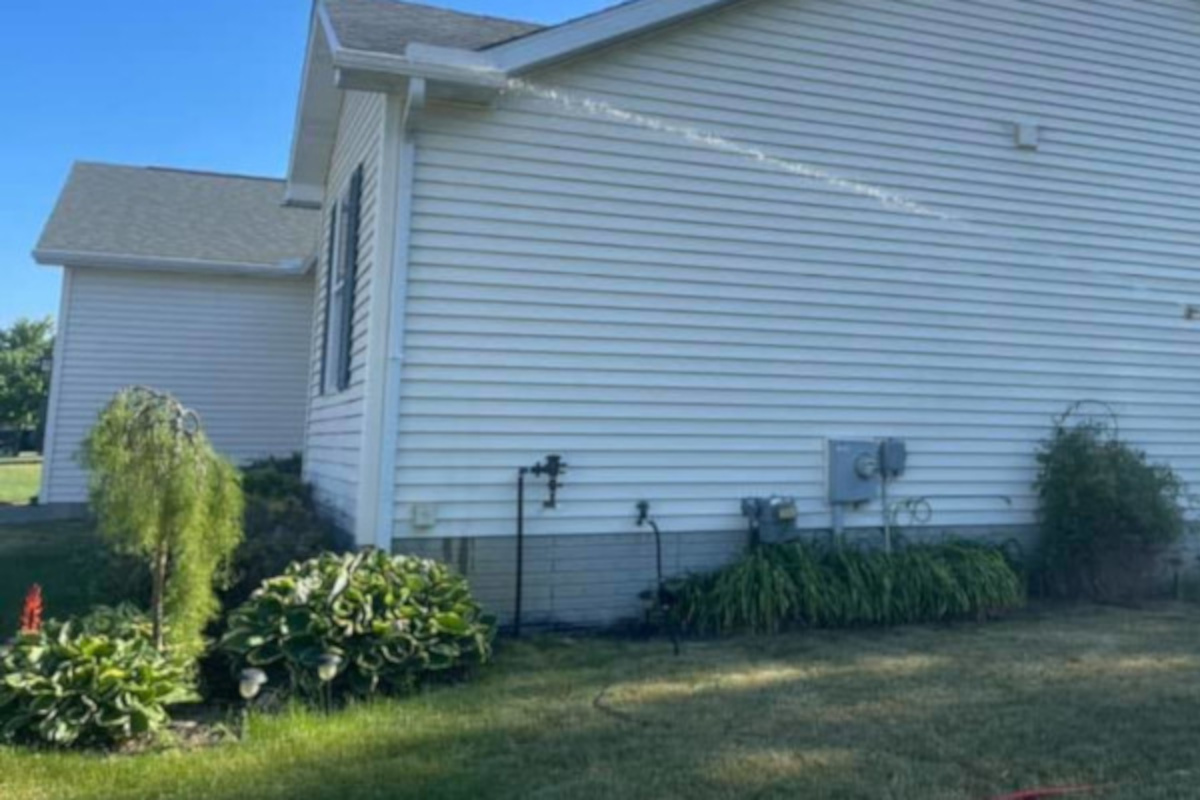
Low-pressure rinse. Once the solution has had time to work, we rinse it away using low-pressure equipment calibrated for your siding material. This lifts the dead growth without forcing water where it doesn't belong.
Post-check. We walk the property again before we call it done. You see the result. We don't leave a job half-finished and call it good enough.
That's the whole process. No shortcuts, no swapping in a pressure washer to save ten minutes on a stubborn spot.
What House Washing Removes
House washing targets the organic growth actually living on your siding, not just the dust sitting on top of it.
Algae -- the green or black film that shows up most on shaded or north-facing walls, where sunlight never dries the surface out. St. Louis humidity keeps it fed all summer long.
Mildew -- gives siding that dingy, chalky look even right after a rain. Homeowners often mistake this for age. It's usually just untreated growth.
Black streaking -- most visible on roofs, where it's caused by gloeocapsa magma algae feeding on shingles. We handle roof cleaning as its own service with its own process, so we won't get into the full details here. If that's the streaking you're seeing, it's worth a separate look.
Left alone, none of this stays cosmetic. It keeps feeding on the surface it's growing on, and the buildup gets harder -- and more expensive -- to reverse the longer it sits.
House Washing Results
A finished house wash isn't subtle. Siding that looked gray and tired goes back to its actual color. Streaking disappears. Trim and entryways that got lost in the grime stand out again.
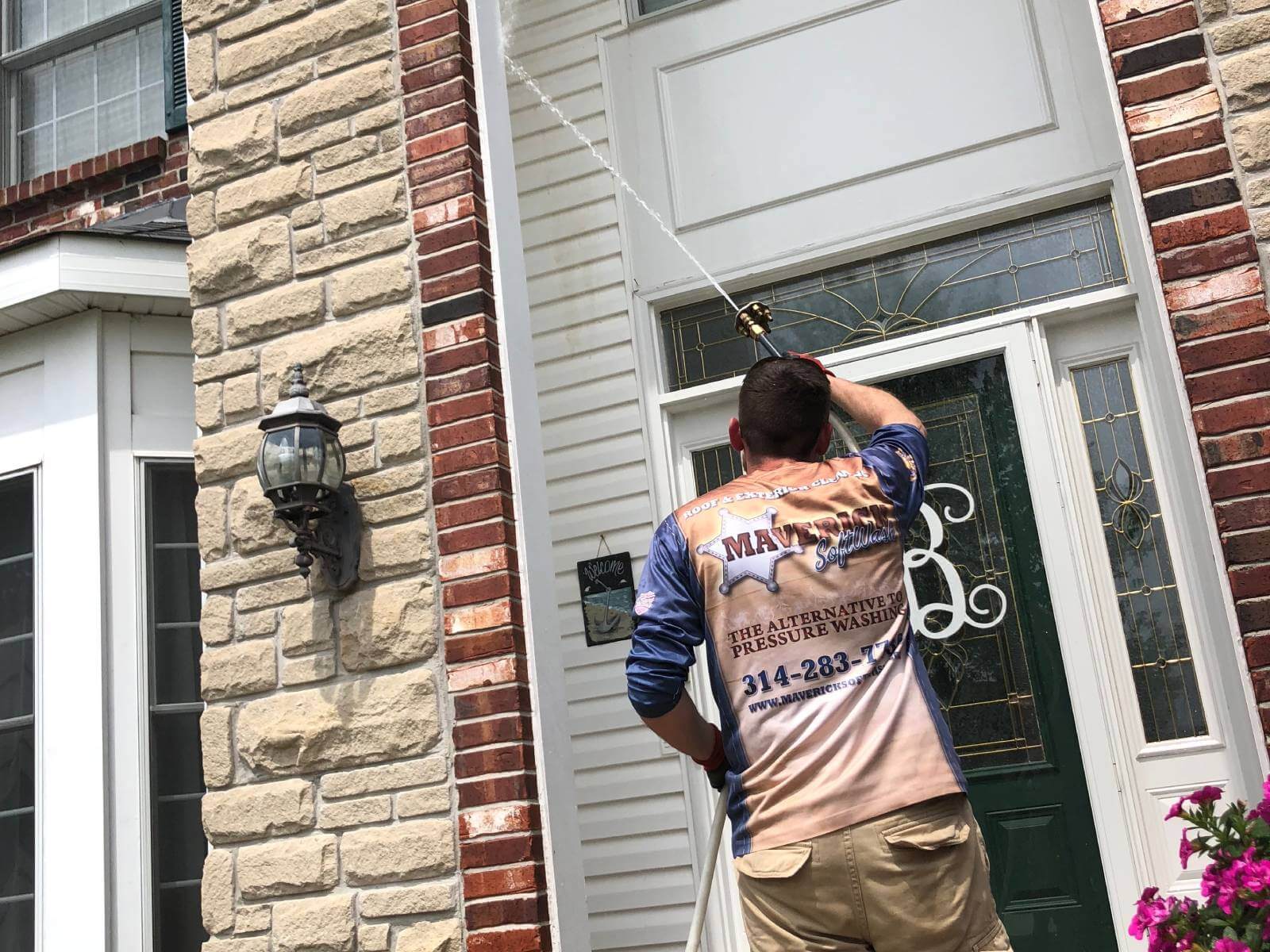
And because we're killing the growth instead of just rinsing off what's visible today, the results hold. A proper soft wash keeps a home looking clean three to five times longer than a pressure rinse, because there's no live algae left behind to start the cycle over again in a few weeks.
Areas We Serve Across Greater St. Louis
Maverick Softwash washes houses across St. Louis City, St. Louis County, and St. Charles County. That covers St. Louis, Chesterfield, Kirkwood, Ballwin, Webster Groves, Wildwood, Town and Country, Ladue, Clayton, Creve Coeur, Des Peres, Manchester, Ellisville, Eureka, Fenton, Oakville, Florissant, St. Charles, O'Fallon, and St. Peters.
We're not a national franchise dropping a crew into St. Louis for the week. This is a local operation running routes through these communities every week, which means a crew showing up at your house isn't building a special trip around your address -- it's part of a normal day.
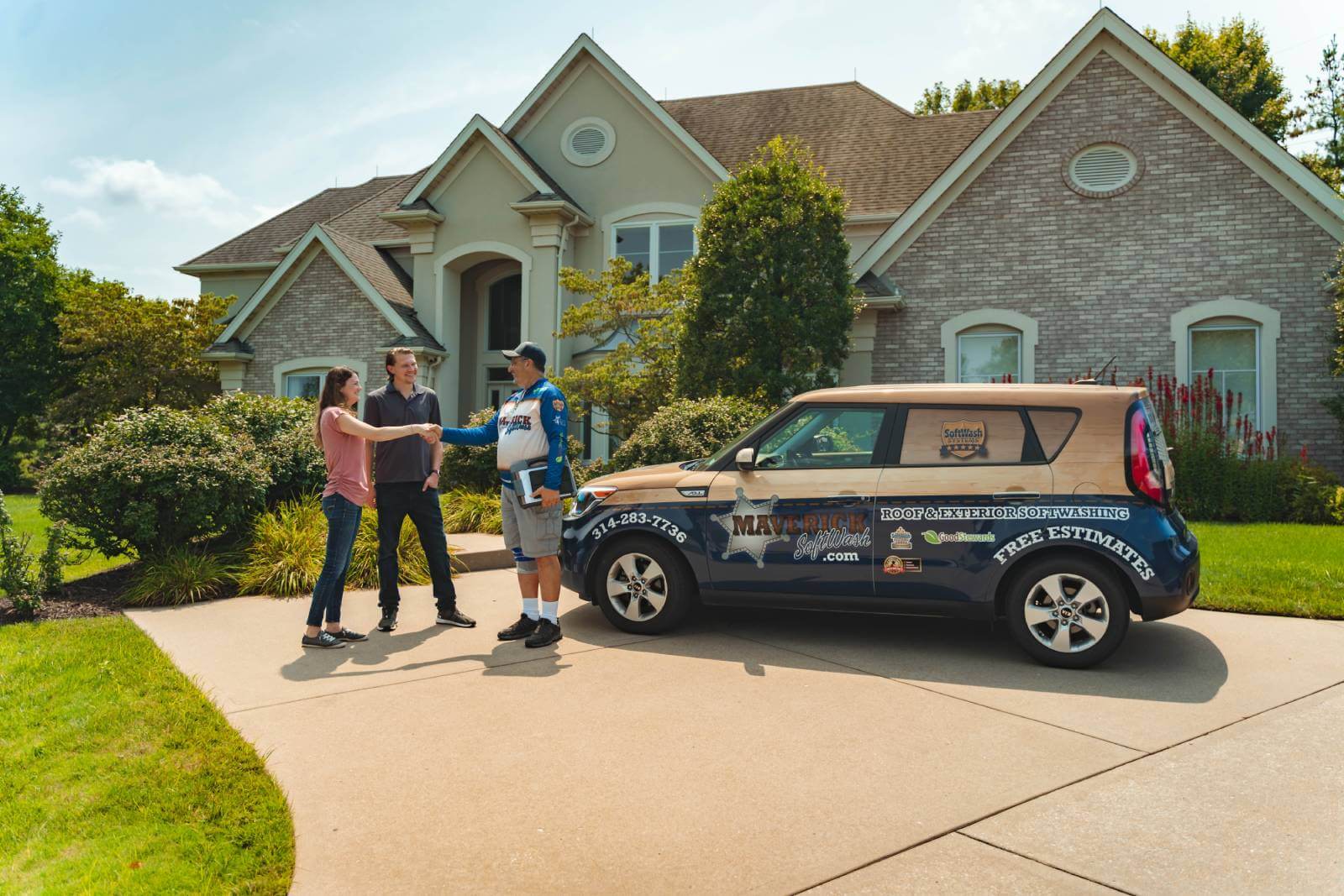
If you're looking for someone close by right now, not just reading about the metro-wide service, our house washing near me page walks through exactly what a good local call should sound like before you commit to anyone.
House Washing Cost & How Often
We're not going to publish a flat number here, and you should be suspicious of anyone who does. Cost depends on real variables: square footage, siding material, number of stories, how bad the buildup is, and whether you're bundling in roof or gutter cleaning. A ranch with light buildup and a three-story home with heavy black streaking are two different jobs, and pretending otherwise means someone's guessing.
For the full cost breakdown, read our post on how much house washing costs in St. Louis.
Frequency depends on your property, too -- tree coverage, sun exposure, and siding material all move the timeline. We wrote a full answer on how often you should wash your house in Missouri if you want the specifics for your situation.
Why Homeowners Choose Maverick Softwash
Maverick Softwash is Ask the Seal™ Certified and fully insured, with decades of hands-on experience across the St. Louis area. That's the baseline any company touching your home should be able to prove, not just claim.
What that certification and insurance back up is a written quote before we ever touch your house, tied to your actual property instead of a rough guess that changes once the hose comes out.
And because this is an owner-accountable operation and not a franchise call center, the person who quoted the job is the same person your crew answers to. That's the difference between a company that fixes a problem fast and one that passes you around until you give up asking.
Want a real number for your house? Get in touch and we'll get you a free, written estimate.
FAQ
What's the difference between house washing and pressure washing?
House washing uses low pressure paired with a cleaning solution that kills algae, mold, and mildew at the root, then rinses it away gently. Pressure washing uses high-pressure water to blast material off a surface. That works fine on concrete. On siding, it can crack vinyl, strip paint, and force water behind panels. We do not pressure wash houses -- we soft wash them, on purpose, every time.
How long do house washing results last?
Because soft washing kills the growth instead of just knocking loose surface dirt, results typically last three to five times longer than a pressure rinse -- often one to two years, depending on tree coverage, sun exposure, and how humid your specific property runs.
Is soft washing safe for all siding types?
Yes. Vinyl, brick, stucco, and wood trim all get the same low-pressure, chemical-based approach, adjusted for the material. It's the method we use across every home we clean, regardless of age or construction.
How much does house washing cost in St. Louis?
It depends on your home's size, siding material, story count, and buildup level, so we don't quote a flat number without seeing the property. For the full breakdown of what drives cost up or down, see our post on house washing cost in St. Louis.